
How I Survived My Viva: What Helped, What Didn’t, and What I Learned
On 13 November 2025, thousands of miles away from my university, I sat my PhD viva online. Two and a half hours later, I heard the words every doctoral researcher hopes for: “You survived.”
It was intense, thoughtful, and surprisingly human. Looking back, I realise that surviving my viva wasn’t about having perfect answers; it was about preparation, mindset, and remembering that the viva is a conversation, not a battle.
Here’s what helped me most.
1. A Mock Viva Changed Everything
A week before my viva, I had a preparation session with my three supervisors. They asked me viva-style questions and, more importantly, gave me feedback on how I was answering.
One of the biggest lessons? Answer the question… and then stop. In my practice answers, I had a habit of giving strong responses… and then continuing long past the point of clarity. My supervisors reminded me that examiners are listening for:
- Do you understand your thesis?
- Can you explain its significance clearly?
Not: How much can you say without breathing?
That session also helped me practise structuring my answers with simple signposts:
- “There are two key things here…”
- “The main contribution is…”
- “To answer your question directly…”
For example, one mock viva question was: “What are the key implications of your research?”
I started well: “I have four key implications from this research. I’ll go into the first in detail…”
And then I kept talking — explaining background, context, and side issues the question hadn’t asked for. My supervisors stopped me. I was drifting and filling the silence instead of answering clearly. I didn’t need to re-explain flood injustice or participation challenges. I just needed to state the implications.
A stronger answer would have been:
“I have four key implications. First, flood resilience planning must better recognise the lived experiences of minoritised ethnic communities. Second, risk communication needs to be more inclusive and accessible. Third, participatory tools like serious games can help bridge gaps between institutions and communities. Fourth, justice must be embedded in flood governance, not treated as an add-on. Together, these show that just flood resilience requires both institutional change and meaningful community engagement.”
Clear. Structured. Done.
That moment taught me something vital: in a viva, silence before or after your answer is not a problem. Examiners are thinking, making notes, or deciding what to ask next. You don’t have to fill every pause.
Rambling feels safer in the moment, but clarity is what actually helps.
2. I Started Preparing Early (and thoroughly)
Five weeks before my viva, I read How to Survive Your Viva. The book leans heavily on defence and strategy metaphors, stressing the importance of justifying every decision in your thesis. While useful, that framing didn’t quite land for me. I didn’t want to approach my viva with a sense of confrontation or defensiveness.
Instead, I chose a different mindset. I reminded myself that my examiners were scholars who had taken the time to read my work and were genuinely interested in it. I wasn’t there to “fight” them; I was there to talk about my research. That shift alone made me calmer and more open during the discussion.
About four weeks before my viva, I began re-reading my thesis from start to finish. I made notes on every page and wrote a short summary of each page’s main point. It was slow, but it rebuilt my mental map of the thesis: how the arguments connected, where the key examples were, and how the chapters flowed into one another.
3. The Tabs I Never Used (But Still Needed)
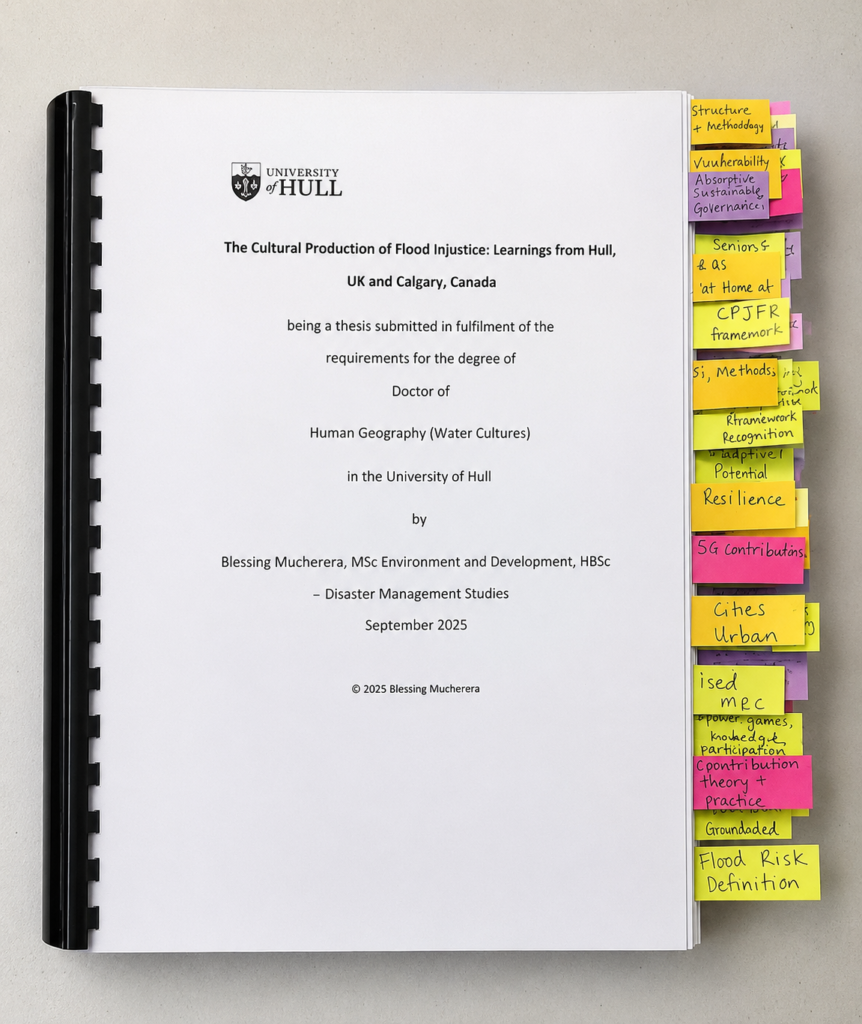
I colour-coded my thesis, using sticky tabs to mark key concepts and sections. My copy looked like a rainbow explosion. Friends later joked about it. And during the viva? I didn’t use them once.
By that stage, I knew the thesis so well that I could navigate it without flipping through pages. But the tabs weren’t useless; they were psychological reassurance. They reminded me of how much work I had put in and gave me confidence during the session.
Sometimes preparation tools are less about use and more about peace of mind.
The Viva Itself Was… Surprisingly Warm
I had imagined a tense, formal interrogation. Instead, it began with small talk. One examiner commented on how sharply dressed I looked and shared a story about wearing a red tie to his own viva years ago. That simple exchange broke the ice and reminded me: these are people, not judges in a courtroom.
The questioning moved from:
- My overall motivation, research aims, and the big-picture framing of the study to
- More detailed discussion of my theoretical choices, methods, and key arguments
They took turns asking questions and often signposted difficulty with humour:
“Now, Blessing, I’m going to grill you.”
“Let me ask you an impossible question…”
We would all laugh and then dive into a serious discussion. That tone made it feel like an intense but respectful academic conversation, not an attack.



They Sometimes Really Do Go Chapter by Chapter
Twice, they asked me to open my thesis to specific pages and respond to something written there. This is the classic viva moment I had been warned about, but it was completely manageable because I had spent weeks re-reading and annotating.
Knowing your thesis deeply matters more than memorising “model answers.”
Take the Break
At one point, the chairperson asked if I wanted a break. I said yes.
Even a short pause helped me reset, breathe, and return with fresh focus. If you need a break, take it. It’s not a weakness; it’s part of sustaining concentration.
The Final Moment
When I was invited back in, the verdict came: “You survived.”
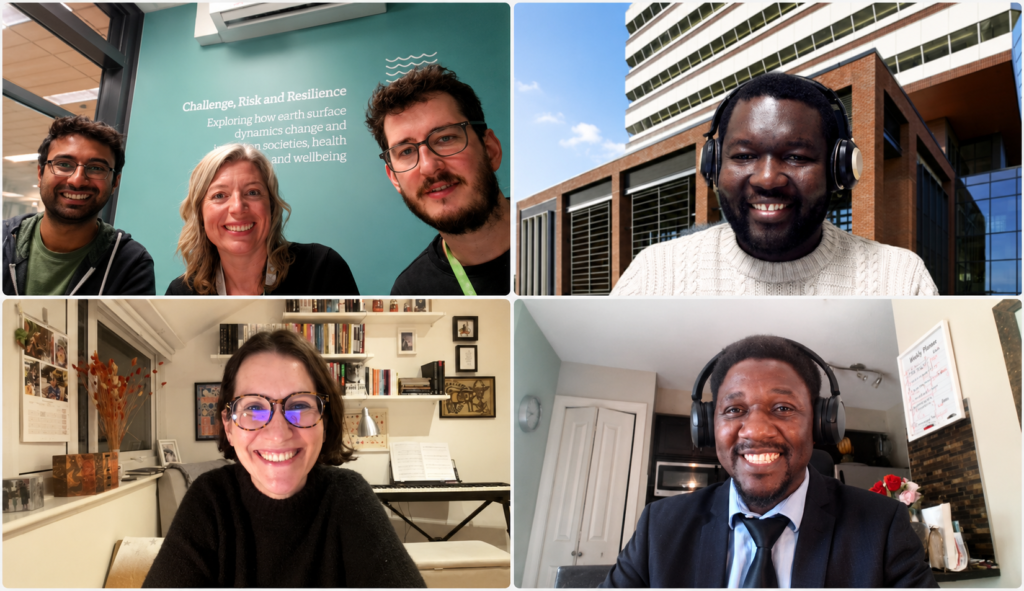
After about two and a half hours, the questioning ended, and the final moments were devoted to administrative formalities. I stepped out of the virtual room briefly while the examiners deliberated.
Relief. Joy. Gratitude. Pride. Eyes welling up. All at once.
What I Learned
If I could tell one thing to anyone preparing for their viva, it would be this:
Your viva is not about catching you out. It’s about showing that you understand your work and why it matters.
Preparation matters. Structure helps. Mindset changes everything.
And sometimes, the rainbow tabs are just there to remind you that you’ve already done the hard part.
You can learn more about my research, publications, and current projects through the links below:
Well done!
Thanks so much!